7 Nights / 6 Days

Thimphu, Punakha and Paro
(7 Nights / 6 Days)

  • OVERVIEW
  • HIGHLIGHTS
  • ITINERARY
  • GALLERY

Trip Overview

Experience the cultural richness and natural beauty of Bhutan, the Himalayan kingdom where happiness is a way of life. Nestled between high Himalayan peaks, Bhutan has preserved its unique traditions, architecture, and spiritual heritage for centuries. This tour offers an in-depth exploration of Thimphu, Punakha, and Paro, combining scenic landscapes with iconic monuments, sacred sites, and immersive cultural experiences.
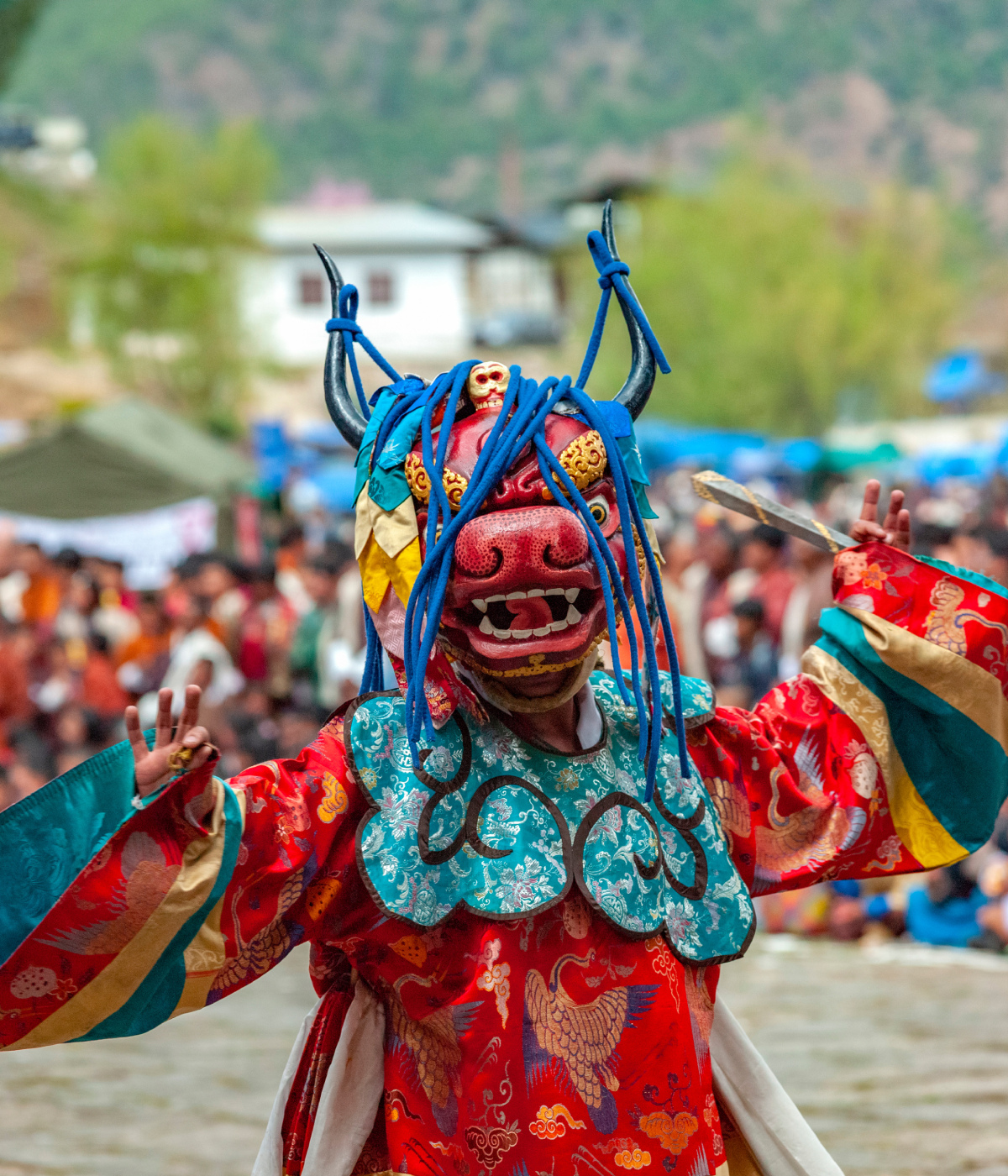
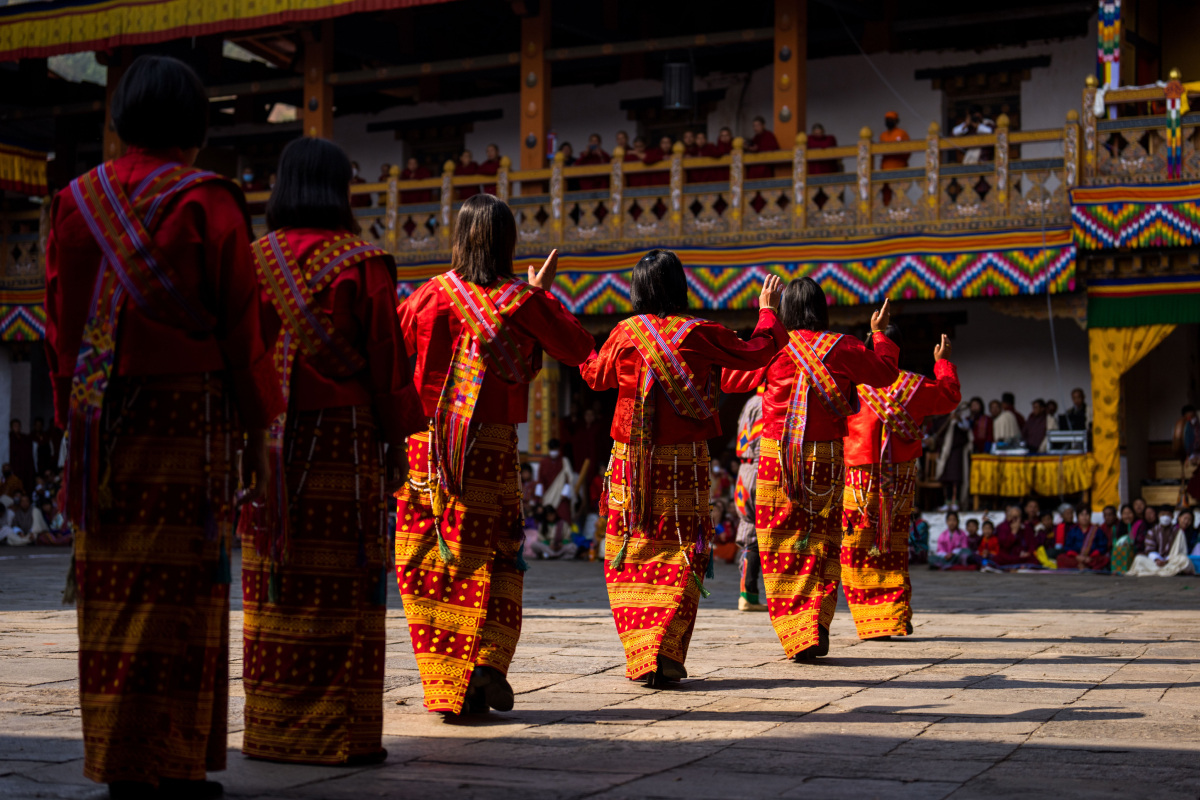
Travelers will witness majestic Dzongs, ancient monasteries, and the spectacular Tiger’s Nest Monastery perched on a cliff. Interactions with local communities, visits to traditional craft centers, and exposure to Bhutanese customs ensure a deeply authentic and enriching experience.

grazing

Thimphu, Punakha and Paro
(7 Nights / 6 Days) Highlights

REGION
Thimphu – Punakha – Paro
MAX ALTITUDE
3,120 m (Tiger’s Nest Monastery)
ACTIVITY
Cultural and Scenic Tour
  • Explore Thimphu, Bhutan’s capital, including Buddha Dordenma, Memorial Chorten, Trashicho Dzong, and traditional craft centers

    Cross the scenic Dochu La Pass and enjoy panoramic views of the eastern Himalayas

    Discover Punakha Valley with its historical Punakha Dzong, Chimi Lhakhang, and ancestral villages of Talo and Nobgang

    Experience cultural exchanges at monasteries such as Nalanda and Sangchen Dorji Lhendrup Nunnery

    Visit Paro’s iconic Rinpung Dzong, National Museum, and Kichu Lhakhang

    Hike to the legendary Tiger’s Nest Monastery, one of Bhutan’s most sacred and photographed landmarks

    Enjoy interactions with local families over traditional butter tea, providing insight into Bhutanese lifestyle and hospitality
Itinerary

Day 1Kathmandu – Paro by Flight and Then Drive to Thimphu (1 Hr Drive/ 54 km)
Breakfast at the hotel

AM: Fly to Paro.

Your journey begins with the most spectacular mountain flight with views of major Himalayan peaks such as Everest, Kanchenjunga and Makalu, and on the final approach Bhutan’s own snowy peaks, the sacred Jhomolhari, Jichu Drake and Tserimgang. You fly over the southern hills, known as ‘dwars’, or gateways into the Himalayas as they rise from the plains until they meet the great snow-capped peaks that rise up to the sky.

On arrival at Paro airport and after completion of airport formalities, you will be met by your representative (guide). Drive from Paro to Thimphu, the modern capital town of Bhutan and an exciting blend of tradition and modernity.

Rest of the day at leisure or you may want to take a stroll through this lively town.

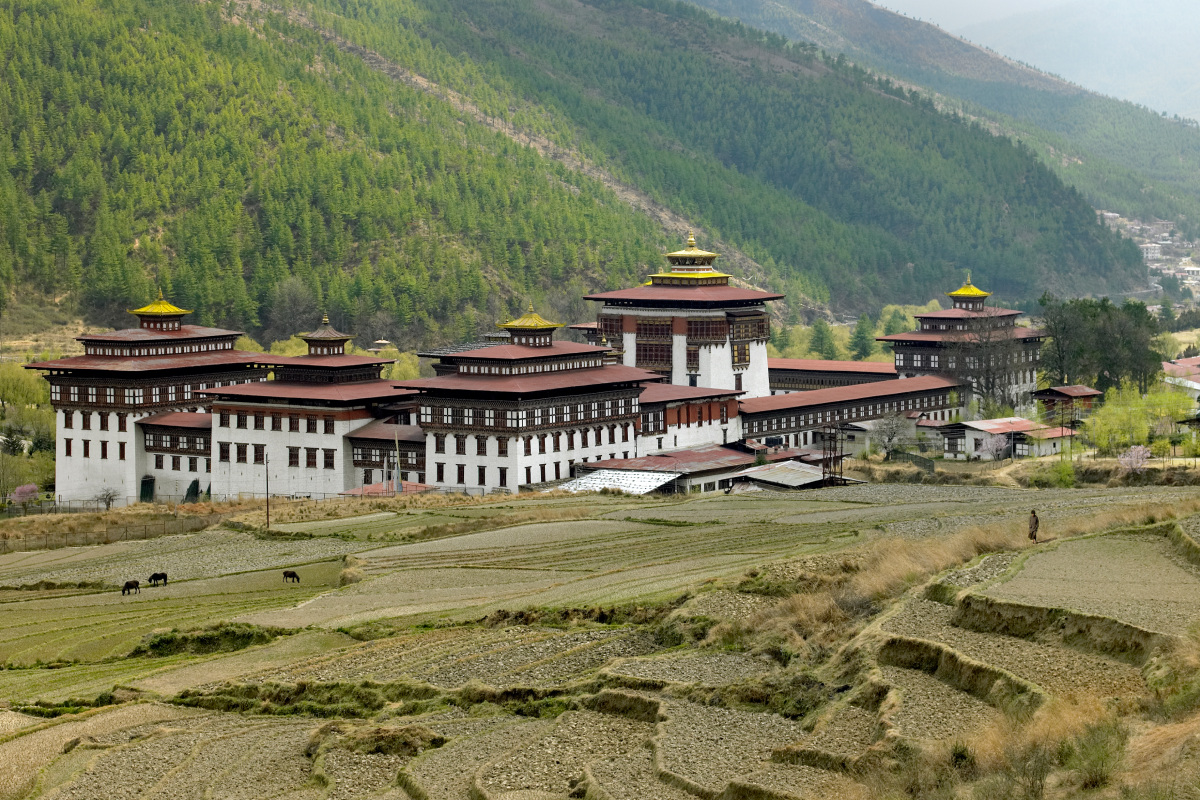
In the evening, time permitting, visit the impressive Trashicho Dzong/fortress which houses the throne room of the King and various government offices. It is also the summer residence of the Chief Abbot and the central monk body. If your visit falls on a working weekday, arrive in time to watch the hoisting of the National Flag and the March of the Guards.

Dinner at a local restaurant

Overnight at Hotel in Thimphu (D)
Day 2Thimphu Valley Exploration
Breakfast at the hotel

Thimphu, perhaps the most unusual capital city in the world, is the seat of government. This bustling town is home to Bhutan’s royal family, the civil service, and foreign missions with representation in Bhutan. It is also the headquarters for a number of internationally funded development projects.

Today’s visit will include:

Buddha Dordenma statue sitting on top of a hill overlooking Thimphu. The Statue of Sakyamuni Buddha is one of the tallest in Asia (51.5 m). The site of Buddha Dordenma offers unobstructed views over the capital town.

Gagyel Lhundrup Weaving Centre: Weaving is predominantly a woman’s domain but this private weaving center is different as it is owned and run by Mr. Kesang (a man – which is very rare in Bhutan). He weaves, creates new and unique patterns, comes up with unusual color combinations and is very involved. The center frequently produces ceremonial textiles for Bhutanese royals, including the traditional outfit for King Jigme Khesar Namgyel Wangchuck and Queen Jetsun Pema’s highly publicized October 2011 marriage. (Closing based on owner’s discretion, in such an event we will replace with another site)

Memorial Chorten, the building of this landmark was originally envisaged by Bhutan’s third king, His Majesty Jigme Dorji Wangchuck, who had wanted to erect a monument to world peace and prosperity. Completed in 1974 after his untimely death, it is both a memorial to the Late King (“the father of modern Bhutan”), and a monument dedicated to peace. During the mornings and evenings, it a bustling place where people of all ages circumambulate the chorten/stupa, pray and prostrate at the shrine, turn the big prayer wheels, offer butter lamps, bask in the sun as they socialize and mingle.

Later visit Traditional Handmade Paper Factory, witness the process from start to finish. The paper is made from the barks of the black Daphne tree. The thicker paper is used for scriptures and the thinner ones are used for wrapping gifts and various other purposes.

Also visit the Authentic Bhutanese Crafts Bazaar which was initiated by an NGO – Agency for Promotion of Indigenous Crafts. The organization has built several traditional bamboo huts that have been rented as shops and all products sold here are mandated by the organization to be made in Bhutan. The minimal rent and small overhead costs allow the small business owners to sustain their business and also provides the local artisans a platform to sell their handmade products at very reasonable rates.

Overnight at Hotel in Thimphu (B, L & D)
Day 3Thimphu – Punakha by Drive (Distance: 76km, Driving Time: 3 Hours)
Breakfast at the hotel

Drive over the high mountain pass of Dochu La Pass (3,050m) where on a clear day, there is a panoramic view of the towering Himalayan peaks. The pass is marked by 108 stupas built by the Queen Mother. On a clear day you will be able to see the snowcapped Himalayan range from here.

Punakha is located in a sub-tropical valley with warm summers and pleasant winters. Punakha served as the capital of Bhutan until 1955, when the seat of government moved to Thimphu.

On arrival, visit Chhimi Lhakhang (temple), a 30-40 minute gradual walk through a village and paddy fields. Situated on a hillock below the village of Metshina, the temple is dedicated to Lama Drukpa Kuenley (also known as the Divine Madman). The temple is popular among women who have difficulties conceiving children.

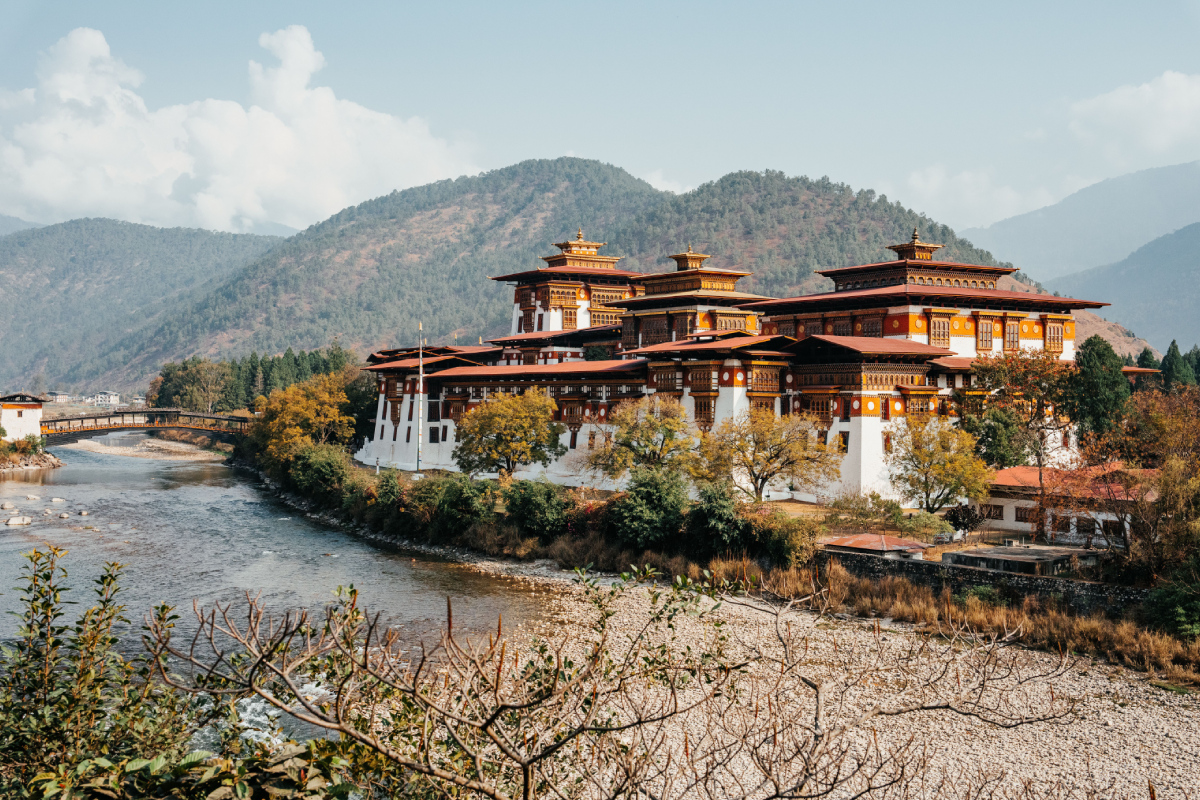
Later visit Punakha Dzong (fortress/), which is strategically built at the junction of the Pho Chu (male) and Mo Chu (female) river. Damaged over the centuries by four catastrophic fires and an earthquake, the dzong/fortress has been fully restored to its former glory. Punakha Dzong is one of the most beautiful fortresses in Bhutan. (Open 11am-1pm & 3pm-5 pm)

Rest of the day at leisure.

Overnight at Hotel in Punakha (B, L & D)
Day 4Explore Punakha Valley
Breakfast at the hotel

Today’s sightseeing includes:

Sangchen Dorji Lhendrup Nunnery, perched on a ridge with spectacular views of the Punakha and Wangdue valleys. The temple houses a 14 foot bronze statue of Avalokiteshvara, one of the biggest in the country. The statue was handcrafted exclusively by local artisans. The temple houses a complex for higher studies and meditation center for nuns. Apart from religious trainings, the nuns are also provided skills such as embroidery, tailoring and statue making.

Explore the picturesque villages of Talo or Nobgang, the ancestral home of the Queen Mothers of Bhutan. The villages are scattered along a ridge above the Punakha valley at an altitude of around 2,800m and is known amongst Punakha villages for its neat and clean appearance. The women here are particularly known for their beauty.

Nalanda Monastery to visit the monks who are pursuing higher Buddhist studies and learning English as well. You may interact with the monks and chat with them. They will be more than happy to practice their English language skills with you.

Rest of the day at leisure.

Overnight at Hotel in Punakha (B, L & D)
Day 5Punakha – Paro by Drive (Distance: 130km, Driving Time: 4 Hours)
Breakfast at the hotel

After breakfast proceed to Paro once again crossing over Dochu la Pass.

Continue to Paro. This beautiful valley encapsulates a rich culture, scenic beauty and hundreds of myths and legends. It is home to many of Bhutan’s oldest temples and monasteries and the country’s only airport. Mt. Jhomolhari (7,300m) reigns in white glory at the northern end of the valley, its glacial waters plunging through deep gorges to form the Pa Chu (Paro River). The Paro valley is one of the kingdom’s most fertile, producing the bulk of Bhutan’s famous red rice from its terraced fields.

On arrival visit the National Museum. The museum collection includes ancient Bhutanese art and artifacts, weapons, coins, stamps and a small natural history collection.

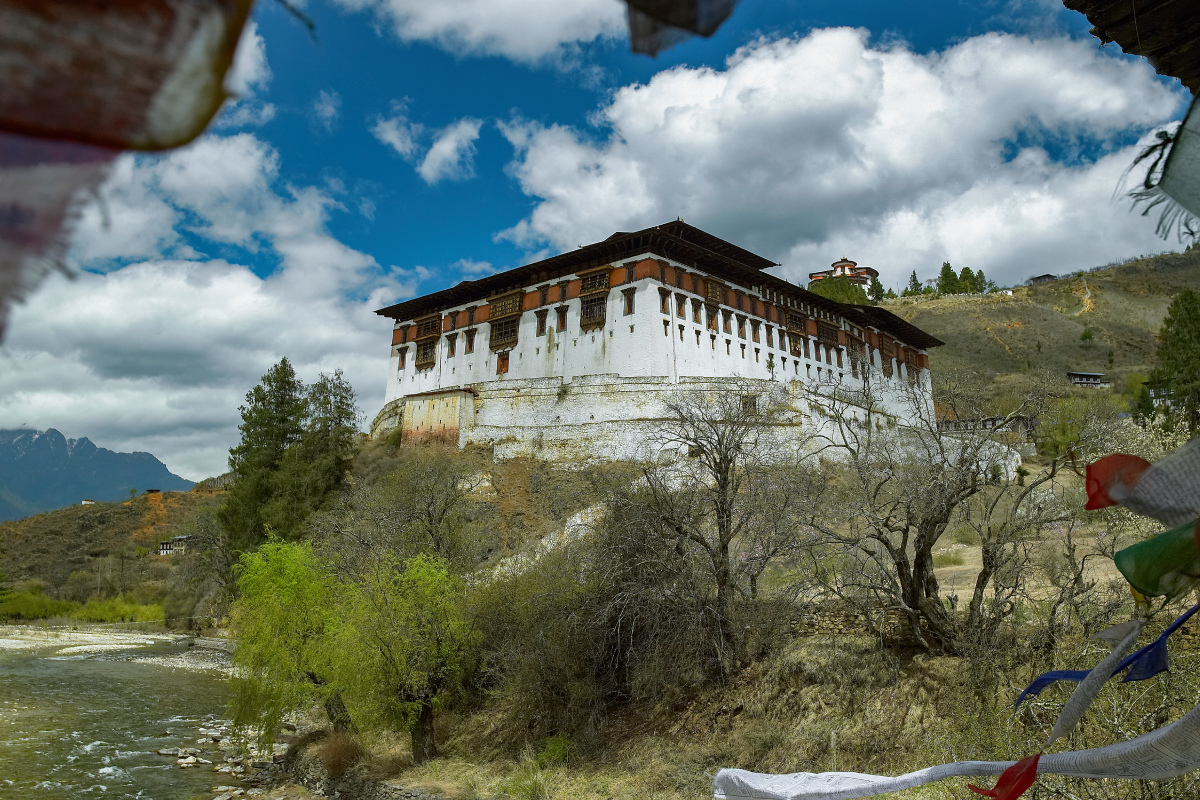
Then walk down a hillside trail to visit Rinpung Dzong (Paro Dzong) situated at a commanding height overlooking Paro valley. Built by Shabdrung Ngawang Namgyal in 1646, this Dzong now houses Paro’s monk body and the offices of the civil administration and is symbolic as the religious and secular center of all affairs of the valley. Walk down a paved stone path running alongside the imposing outer walls and across a traditional cantilever bridge adorned with colorful prayer flags. If you drive a little further down along the river, there is a good spot where you can capture all three sites – the Cantilever Bridge, Paro Dzong and the National Museum.

End the day with a visit to a Farmhouse to share a cup of traditional butter tea with the family.

Overnight at Hotel in Paro (B, L & D)
Day 6Tiger’s Nest Hike (Total Hike Time: 4-5 Hours)
Breakfast at the hotel

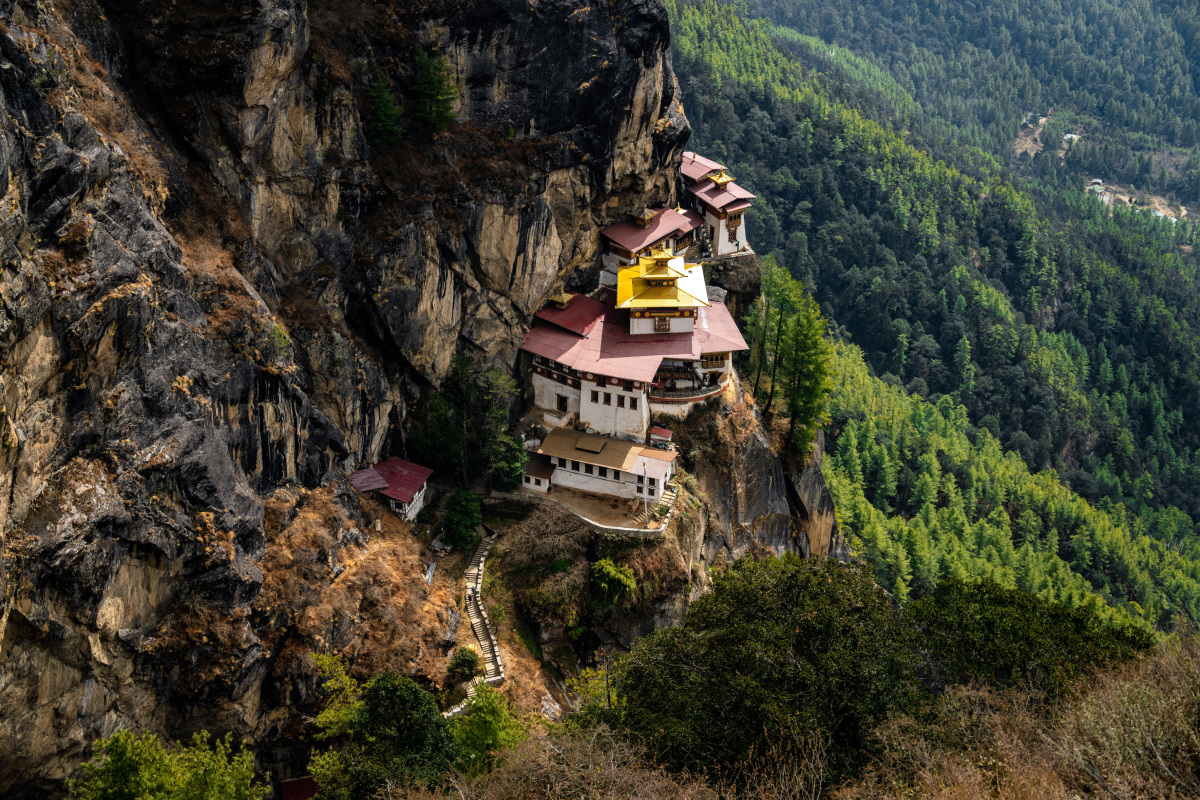
Tiger’s Nest” monastery, most famous of Bhutan’s monasteries, is spectacularly located on the side of a cliff 900m above the valley floor. It is said that in the 8th century Guru Rinpoche flew on the back of a tigress from eastern Bhutan to this place and meditated in a cave here for 3 months, hence its name, “Tiger’s Nest”. The principal temple of the present monastic complex dates from 1692. The main structure was severely damaged by fire in 1998, but after many years of painstaking restoration work, the complex has now been fully restored to its former glory. A pilgrimage to Taktsang is the dream of a lifetime for the devout.

Also visit Kichu Lhakhang, one of the oldest temples in the country. The temple is one of the 108 temples built in the Himalayas by the Tibetan king, Songtsen Gampo to subdue a demoness in the 7th century. The building of this temple marks the introduction of Buddhism in Bhutan.

Evening explore the quaint Paro town.

Overnight at Hotel in Paro (B, L & D)
Day 7Paro – Kathmandu by Flight
Breakfast at the hotel

AM: Transfer to Paro International Airport for your onward flight.
Talk to an Expert
Rajani Kapali
Tour Manager
ENQUIRE NOW