08 Nights / 09 Days

Thimphu – Bumthang – Gangtey – Punakha – Paro

  • OVERVIEW
  • HIGHLIGHTS
  • ITINERARY
  • GALLERY

Trip Overview

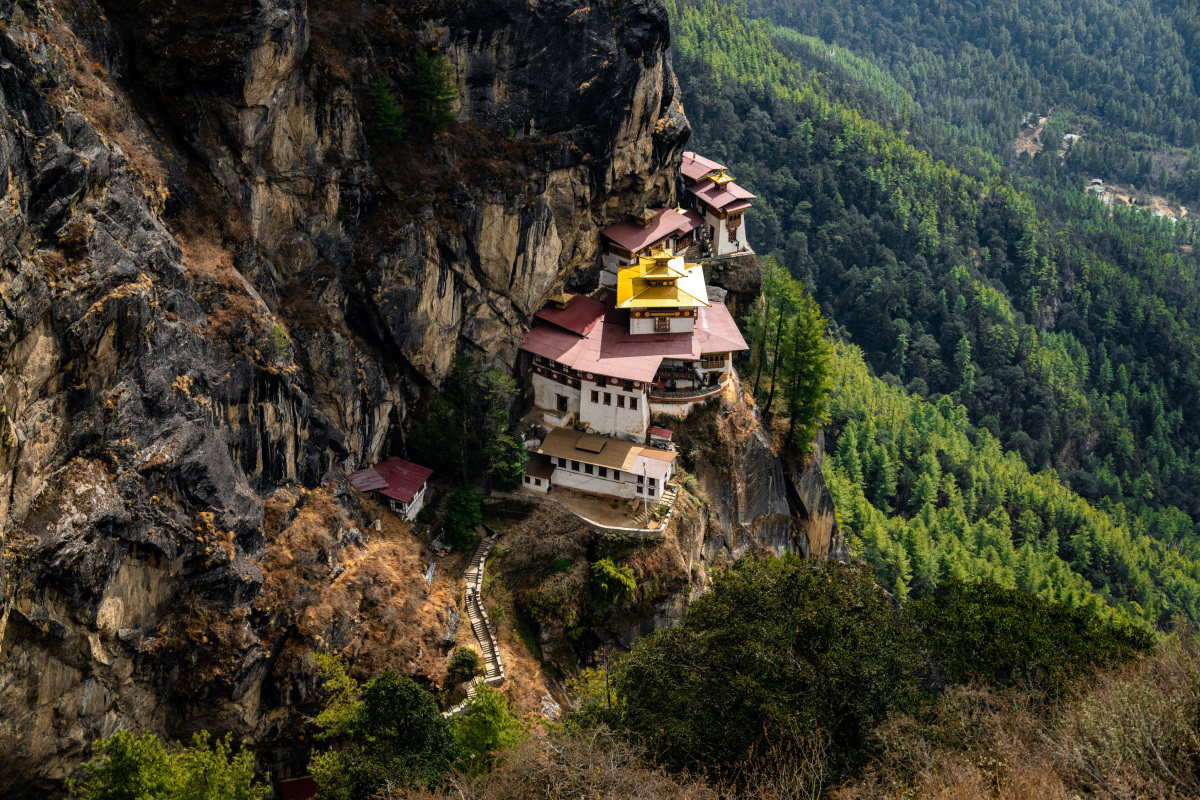
The Bhutan Cultural Tour offers a remarkable journey through the spiritual and natural beauty of the Himalayan Kingdom. Over nine days, travelers experience Bhutan’s serene valleys, centuries-old monasteries, majestic fortresses, and pristine mountain landscapes. From the lively capital Thimphu to the remote valleys of Bumthang and Gangtey, each destination reveals Bhutan’s deep-rooted traditions, Buddhist philosophy, and sustainable way of life. The journey concludes in Paro, home to the iconic Taktsang Monastery, famously known as the Tiger’s Nest.

The tiny Buddhist Kingdom of Bhutan awaits, nestled high in the Himalayas its isolation from the world has cultivated some culture rich in traditions, religion and a benevolent monarchy. The dramatic landscapes, from snowcapped peaks and deeply forested slopes to raging, boulder strewn rivers, sit largely undisturbed as the endeared environmental initiatives and religious beliefs leave the Kingdom pristine and a jewel of nature.

Please note that some of the sights/itinerary may change due to season, weather, national holidays, and special events. We maintain the rights to alter the itinerary since tours are made in advance and unforeseen circumstances that mandate change may arise. Itinerary changes are made to improve your overall travel experience in Bhutan.

grazing

Thimphu – Bumthang – Gangtey – Punakha – Paro Highlights

REGION
Bhutan
MAX ALTITUDE
3,100 m (Taktsang Monastery)
ACTIVITY
Cultural and Scenic Overland Journey
DIFFICULTY
Easy to Moderate
  • Scenic flight into Paro with panoramic views of the eastern Himalayas

    Visit Thimphu, Bhutan’s vibrant capital blending tradition and modernity

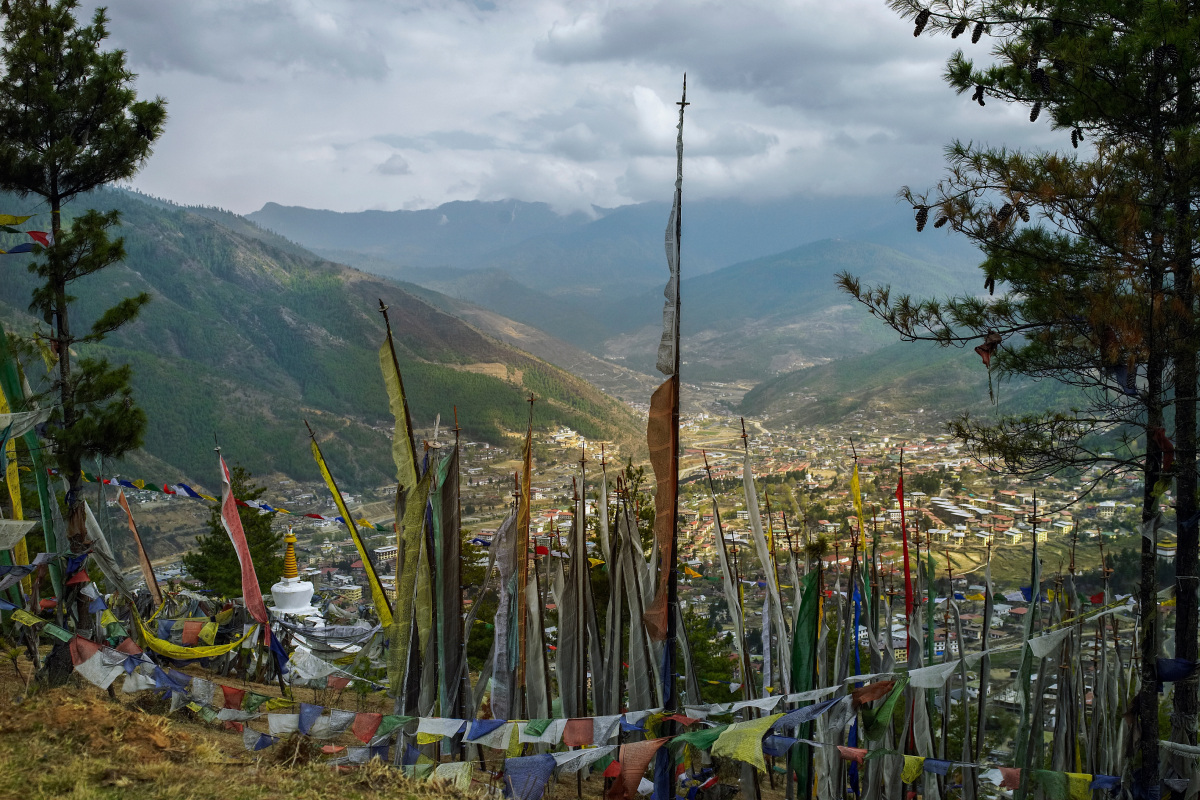
    Cross Dochu La Pass (3,100 m) with views of 108 stupas and Himalayan peaks

    Explore Punakha Dzong, Bhutan’s most beautiful fortress

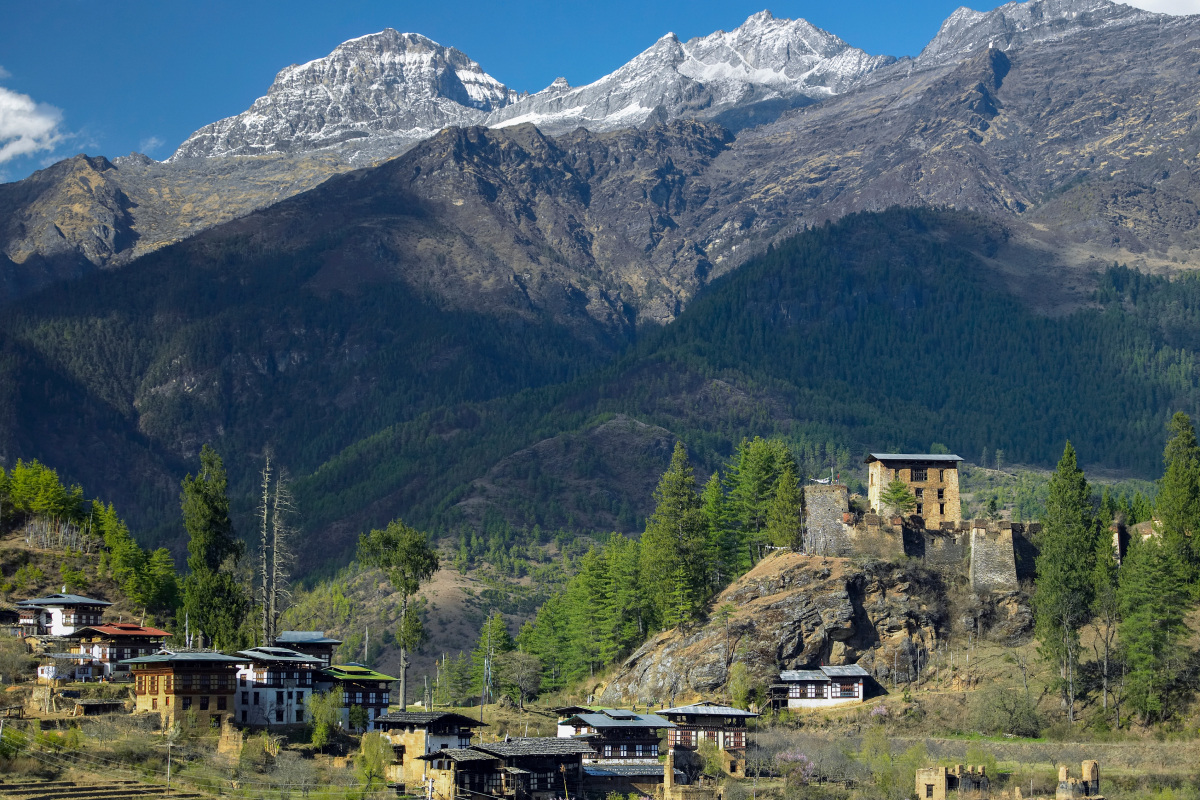
    Discover Bumthang Valley, the spiritual heartland of Bhutan

    Enjoy nature walks and wildlife sightings in Gangtey (Phobjikha Valley)

    Visit Paro Dzong, Kyichu Lhakhang, and the National Museum

    Hike to the legendary Taktsang Monastery (Tiger’s Nest)
Itinerary

Day 1Arrive Paro by Flight and Then Drive to Thimphu (2 hr Drive / 54 km)
On a clear day, the flight to Paro is breathtaking, with views of major Himalayan peaks such as Everest, Kanchenjunga You will fly over the southern hills, known as ‘duars’, or gateways into the Himalayas as they rise from the plains until they meet the great snow-capped peaks that rise up to the sky. The decent into Paro valley takes you through a narrow valley between the mountains and past villages and houses that appear to be a little too close and makes you wonder if this is normal. Then the valley suddenly opens up to reveal a wider valley with rice fields, villages and the airstrip located along a river. Paro airport is the only airport in the world where the altitude exceeds the length of the airstrip. Although the flight and landing at Paro may sound unnerving, you are in good hands as the pilots are specially trained to fly and land here. Many have described the flight to Paro as breath taking.

On arrival, proceed to immigration where you will present your Visa Approval Letter and Passport for the official stamp. As you clear the Immigration check, please make your way to the baggage delivery area and at the exit door of the airport you will meet your Guide who will accompany you throughout your stay in Bhutan.

Transfer to Thimphu. Once a rustic village sitting in a broad, fertile river valley, Thimphu is today the nation’s bustling capital. It is the center of government, religion and commerce with an interesting combination of tradition and modernity.

On arrival, check-in at the hotel.

Buddha Dordenma statue sitting on top of a hill overlooking Thimphu. The Statue of Sakyamuni Buddha is one of the tallest in Asia (51.5 m). The site of Buddha Dordenma offers unobstructed views over the capital town. (Closes Daily Nov-Feb at 4pm & Mar-Oct at 5pm)

Dinner at the hotel

Overnight at Hotel in Thimphu (B, L & D)
Day 2Explore Thimphu Valley
Breakfast at the hotel

Thimphu, the capital of Bhutan, is a fascinating mix of traditional Bhutanese culture and modern development. It’s the largest city in Bhutan, located in a valley along the banks of the Wang Chhu River, and is a great destination for exploring Bhutanese history, religion, and daily life.

Today’s visit will include with Lunch at a local restaurant:

Zorig Chosum, (also known as the painting school) offers a six-year course in the 13 traditional arts and crafts of Bhutan. The students follow a comprehensive course that starts with drawing and progresses through painting, woodcarving, embroidery and statue-making. This is a great opportunity to interact and photograph the students while they practice their skills in the classroom. (Closed on Sat 1pm, Sun, Govt. Holidays, School Break Jul, Jan-Feb).

Memorial Chorten, the building of this landmark was originally envisaged by Bhutan’s third king, His Majesty Jigme Dorji Wangchuck, who had wanted to erect a monument to world peace and prosperity. Completed in 1974 after his untimely death, it is both a memorial to the Late King (“the father of modern Bhutan”), and a monument dedicated to peace. During the mornings and evenings, it a bustling place where people of all ages circumambulate the chorten/stupa, pray and prostrate at the shrine, turn the big prayer wheels, offer butter lamps, bask in the sun as they socialize and mingle. (Closes Daily Nov-Feb at 4pm & Mar-Oct at 5pm)

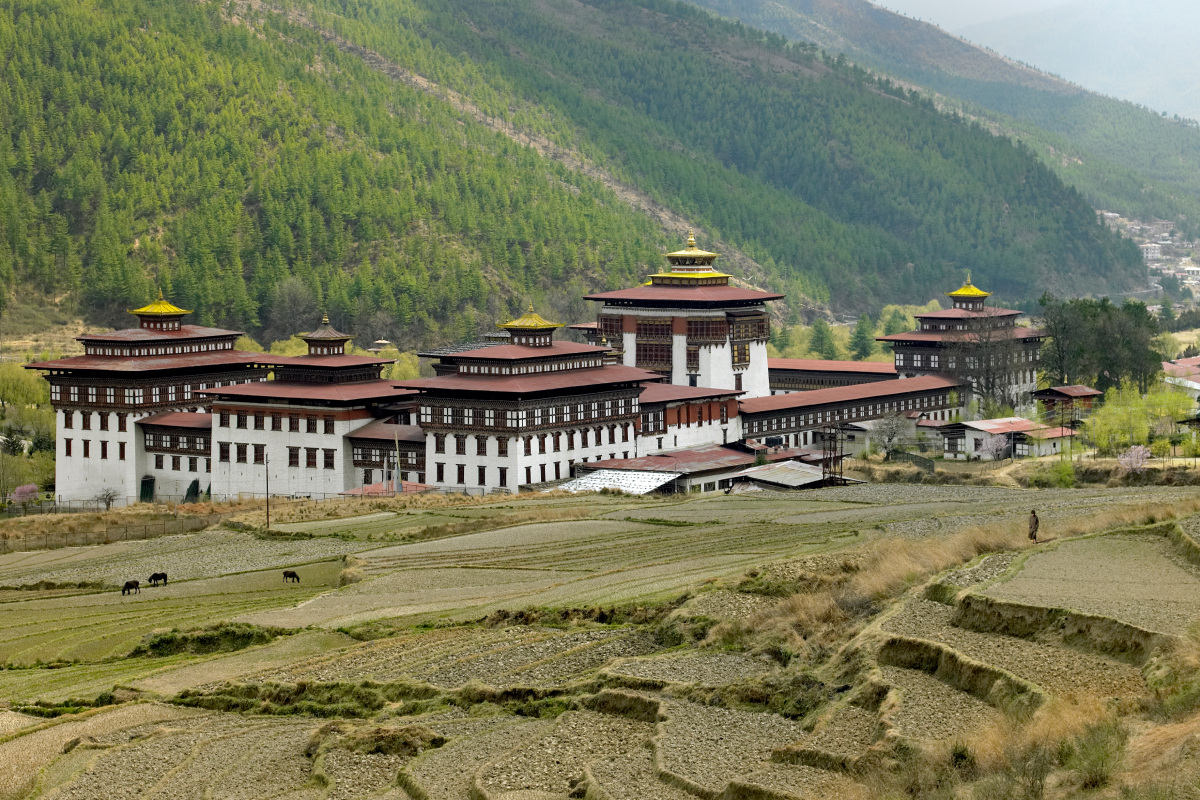
Trashicho Dzong/fortress which houses the throne room of the King and various government offices. It is also the summer residence of the Chief Abbot and the central monk body. If your visit falls on a working weekday, arrive in time to watch the hoisting of the National Flag and the March of the Guards. (Open: Mon-Fri [Mar-Oct after 5:30pm] [Nov-Feb after 4:30 pm] / Open on Sat, Sun, Govt. Holidays)

Evening free or time permitting visit Weekend Market: Most of the Thimphu’s population and many valley dwellers converge on the bustling weekend market, held down by the river. A wide range of foodstuffs and local arts and crafts are sold at the market, which runs from Friday afternoon to Sunday. A visit to the market provides great photo opportunities, as well as the chance to mingle with local people and perhaps buy souvenirs. (Open Fri-Sun)

Dinner at the hotel

Overnight at Hotel in Thimphu (B, L & D)

Day 3Dispatch to Punakha (75 km /3 hrs)
Breakfast at the hotel

The Dochu La ( Dochu Pass, la means pass in Dzongkha) is a mountain pass in the snow covered Himalayas within Bhutan on the road from Thimphu to Punakha where 108 memorial chortens or stupas known as “Druk Wangyal Chortens” have been built by Ashi Dorji Wangmo Wangchuk, the eldest Queen Mother. Apart from the chortens there is a monastery called the Druk Wangyal Lhakhang (temple), built in honour of the fourth Druk Gyalpo (head of the state of Bhutan), Jigme Singye Wangchuck;] the open grounds in its front yard is a venue for the annual Dochula Druk Wangyel Festival. The pass with 108 memorial chortens is adjacent to the country’s first Royal Botanical Park. Punakha, once the capital of Bhutan, is known for its breathtaking landscapes, historical significance, and pleasant climate. It is located at a lower altitude than Thimphu, making it a warmer region, especially during winter. The valley is also famous for its lush valleys and rice fields.

We descend down till we reach the village of Lobeysa/Mitsina. On arrival, visit Chhimi Lhakhang (temple), a 30-40-minutes gradual walk through a village and paddy fields. Situated on a hillock below the village of Metshina, the temple is dedicated to Lama Drukpa Kuenley (also known as the Divine Madman). The temple is popular among women who have difficulties conceiving children.

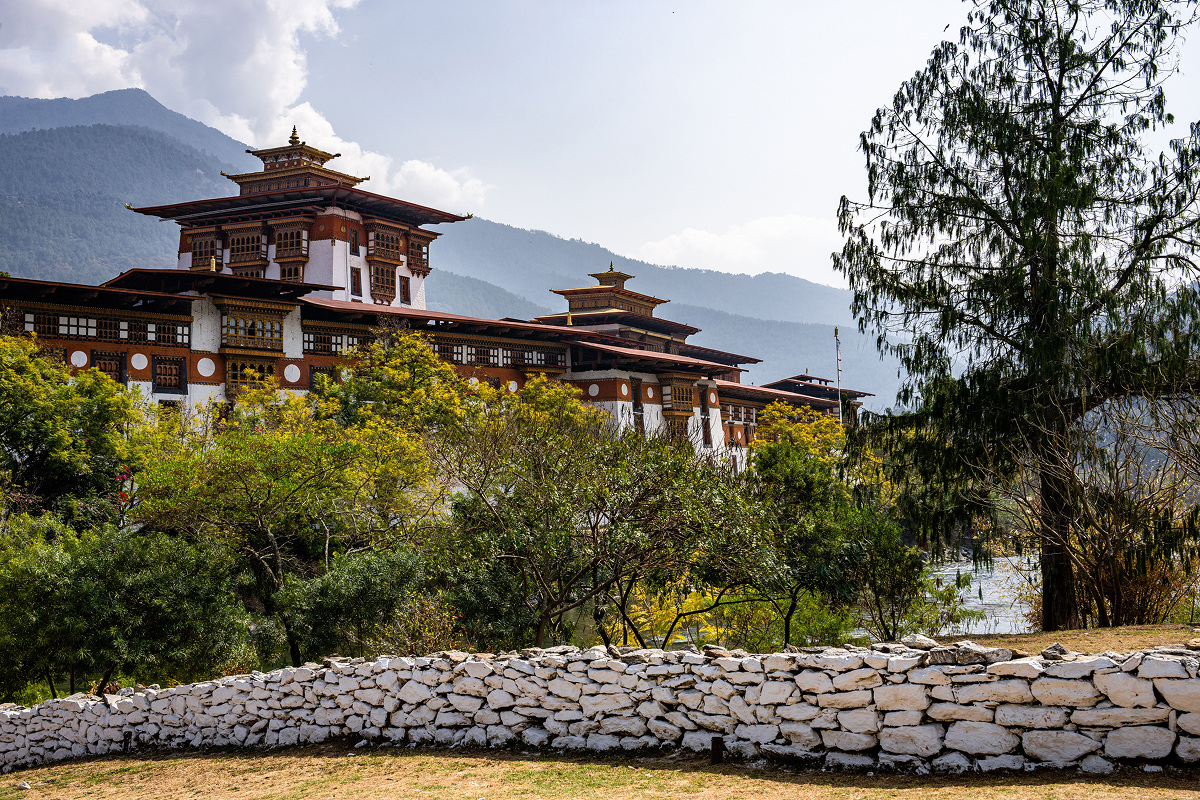
Punakha Dzong, the Dzong built in 1637 by Shabdrung Ngawang Namgyal to serve as the religious and administrative center of the region. Damaged over the centuries by four catastrophic fires and an earthquake, the Dzong has been fully restored in recent years by the present monarch.

Punakha Suspension Bridge. One of Bhutan’s longest suspension bridges, stretching over 160 meters, it connects the Punakha Dzong to nearby villages. The bridge offers stunning views of the river and surrounding mountains, and it’s an exciting experience to walk across, especially for those seeking a bit of adventure.

Lunch at a local restaurant.

Dinner at the hotel.

Overnight at Hotel in Punakha (B, L & D)
Day 4Transport to Bumthang Valley. 180km (8 Hrs.)
Breakfast at the hotel

The first light of morning peeked through the curtains, casting a soft glow on the sleepy streets outside. Dispatch to Bumthang which is 8 and half hour’s drive. On the way we will stop for spotting a quaint roadside attraction.

Chendebji Chorten is a stupa in Bhutan, located 41 kilometers (25 mi) west of Trongsa at 2,430 metres (7,970 ft) in elevation. According to legend, Chendebji Chöten covers the body of an “evil spirit” Chendebji Chorten is constructed in the style of Nepalese stupas such as Boudhanath. It was built at some point in the 18th century, and is located along the Chorten Lam, a path connecting various chortens in Bhutan. A prayer wall or mani stone is in the complex. It was constructed by Lam Oensey Tshering Wangchuk, reportedly to repel the demon Ngala.

Trongsa Dzong, it was the seat of power over central and eastern Bhutan and the vanguard of the warriors. All the Kings of Bhutan first invest as the Trongsa Penlop before ascending the Raven Crown throne. the massive Trongsa Dzong is the largest fortress in Bhutan which stands on a spur overlooking the gorge of the Mangdi Chuu river. This strategically placed structure is the first sight long before reaching Trongsa. The Dzong is a massive structure with many levels, which slope down the contours of a hill on which it perches. Because of its highly strategic position as the only connecting route between east and west, the Trongsa Penlop was able to control the whole eastern region effectively.

Lunch at a local restaurant.

Dinner at the hotel.

Overnight at Hotel in Bumthang (B, L & D)
Day 5Exploring Bumthang Valley
Breakfast at the hotel

Jambay Lhakhang is one of the oldest temples in Bhutan. Located in Jakar valley in Bumthang – central Bhutan, the temple was built in the early 7th century by the Tibetan Emperor Songtsen Gampo. He commissioned the creation of 108 temples in successive circles to pin down an evil demoness who was seen to be blocking the spread of Buddhism. This temple is one of two such temples in Bhutan, the other being Kichu Lhakhang in Paro valley. The Jambay Lhakhang is dedicated to the future Buddha, Maitreya (Sanskrit) or Jambay (Dzongkha), thus the name Jambay Lhakhang. Many historians assert that Buddhism appeared in the country for the first time with the establishment of this temple. Both historically and culturally, this temple remains one of the most important landmarks of the kingdom.

Kurjey lhakang, it is dedicated to Saint Guru Padmasambhava who meditated here in the 8th century and has left his body imprint on the rock. The temple which can be seen today was built attached to the rock where Guru Padmasambhava has left his body print. Thus, the name Kurje means Body Imprint in respectful terms. This is a very sacred site for the Bhutanese.

Tamshing Lhakhang, Bumthang Overview, Tamshing Lhakhang is just across the river from Kurjey Lhakhang, in the Bumthang district of central Bhutan. For those interested in art and paintings, this site is a must-visit. With several ancient paintings such as that of 1000 Buddhas and 21 Taras, the monastery was built by famous saint Pema Lingpa in 1501. It is slowly approaching ruin; however, it has a strong connection with scholars and historians for that very reason. Famous festivals like Tamshing Phala Chhoepa takes place in Autumn as well as other sacred masks dances. It is advisable to follow clothing etiquette while you’re here.

Bumthang Red Panda Brewery and Bumthang Cheese Factory, Bumthang Overview Situated right next to each other in Bumthang, Red Panda Brewery and Cheese Factory are quite interesting to visit and are in fact owned by Fritz Maurer, the same Swiss national who owns the Swiss Guest House. Established in the 1960s, the site produces Emmenthal and Gouda using state-of-the-art cheesemaking machines. At the brewery, one can witness the process which results in unfiltered Weiss Beer. Apple cider and wine are also available. Since it is not brewed every day, prior calling and confirmation must be done. The cheese factory offers not just an insight into the cheese-making process but also offers a variety of cheeses to buy and produces apple brandy and clover honey.

Lunch at a local restaurant.

Dinner at the hotel.

Overnight at Hotel in Bumthang (B, L & D)
Day 6Transfer to Gangtey (150 km / 5 hrs)
Breakfast at the hotel

Set close to the center of Bhutan, the wide glacial valley of Gangtey, often referred to as Phobjikha Valley, is one of the most beautiful destinations in Bhutan. Extremely diverse, the sacred and protected area is home to some of the most exotic as well as rare wildlife species, including the globally endangered, black-necked cranes that arrive every year from the Tibetan Plateau. It is believed along with their sacred arrival comes a good potato harvest and prosperity for the valley. Gangtey also boasts its own important religious sites, including the Gangtey Monastery situated at the head of the valley. It is here adventurers are spoilt with exceptional valley views as well as an array of nature trails.

Gangtey Nature Trail. Walk along the Gangtey Nature Trail, quite popular amongst the visitors to the valley. Crossing streams and rhododendron gardens you cross Sumchubara village, afterwards you enter the Pine covered forest, which opens at a canopy that affords fabulous views of the valley. Further down, the trail passes the village of Khewang and later you will cross the Nake Chu where you will be picked up by your car. You may even be lucky enough to spot some Himalayan Black bear, Red Panda, or Tibetan fox, as many of our guests have experienced.

Black necked cranes centre. black-necked cranes are among the endangered birds that migrate to Bhutan during the winter season. While these endangered birds can be found in other Bhutanese regions, like Bumthang Valley, Gangtey is home to most black-necked cranes every year. Visit the Black-necked Crane Information Centre, situated on the edge of the forest and wetland to learn more about these incredible creatures.

Lunch at a local restaurant.

Dinner at the hotel.

Overnight at Hotel in Gangtey (B, L & D)
Day 7Transfer to Paro Valley (180 km / 6 hrs. Drive)
Breakfast at the hotel

Paro is one of Bhutan’s most picturesque and culturally significant destinations. Known for its stunning valley, rich history, and religious sites, Paro is also home to Bhutan’s only international airport, making it the gateway for most visitors.

This morning, set off for Paro after once again crossing Dochula pass. On arrival, check-in at the hotel. After Lunch drive towards the north end of the valley to visit the National Museum. The museum collection includes ancient Bhutanese art and artifacts, weapons, coins, stamps and a small natural history collection. National Museum- Perched above Paro Dzong is its ta dzong (watchtower), built in 1649 to protect the undefended dzong and renovated in 1968 to house the National Museum. The unusual round building is said to be in the shape of a conch shell, with 2.5m-thick walls. The ta dzong suffered damage in the 2011 earthquake but reopened in 2019 as the nation’s premier museum.

Kyichu Lhakhang: This hakhang, built in the 7th century, is one of the two oldest and most sacred shrines in Bhutan (the other being Jambey Lhakhang in Bumthang). Kyichu Lhakhang is composed of twin temples. The first temple was built by the Tibetan king, Songtsen Gampo in the 7th century. In 1968, H.M. Ashi Kesang, the Queen Mother of Bhutan, arranged for a second temple to be built alongside the first one, in same style.

In the evening, visit a traditional farmhouse for an opportunity to interact with a local family and learn something of their lifestyle, and rest of the day at leisure

Lunch at a local restaurant.

Dinner at the hotel.

Overnight at Hotel in Paro (B, L & D)
Day 8Taktsang Hike (Total Hike Time 4-5 Hrs.)
Tiger’s Nest is a must-visit for anyone traveling to Bhutan. The combination of natural beauty, cultural significance, and the sense of achievement from completing the hike makes it one of the highlights of any trip to Bhutan.

In the morning, take an excursion to Taktsang Monastery also known as Tiger’s Nest. It is believed that Guru Rinpoche, founding father of the Bhutanese form of Mahayana Buddhism, arrived here on the back of a tigress and meditated at this monastery. The main structure was severely damaged by fire in 1998, but after many years of painstaking restoration work, the complex has now been fully restored to its former glory.

Balance of the day at leisure to explore beautiful craft market in Paro town.

Lunch at a local restaurant.

Dinner at the hotel.

Overnight at Hotel in Paro (B, L & D)
Day 9Final Departure
Breakfast at the hotel

Drive to Paro airport to leave this beautiful Himalayan country and take a flight back to your homeland. We hope you have taken lots of everlasting photos and memories with new friends. We look forward to seeing you back to this enchanting Himalayan realm.

The driving and hiking times mentioned are approximate times and do not include breaks in the journey for sightseeing, photo/tea/meal/rest stops. During the treks/hikes, there may be delays or diversion of hiking trails due to trail conditions, inclement weather and other unforeseen circumstances.

Talk to an Expert
Rajani Kapali
Tour Manager
ENQUIRE NOW