


Every year, the streets of Lalitpur come alive with the sounds of traditional drums, chanting devotees, and the cheers of thousands of people pulling an enormous wooden chariot through narrow alleys and historic squares. For locals, this is not just a festival—it is a living tradition that has connected communities, faiths, and generations for centuries.
Welcome to Rato Machindranath Jatra, one of Nepal’s oldest and most significant festivals.
If you are visiting Nepal and wish to experience a celebration that truly reflects the country’s rich cultural heritage, spiritual diversity, and vibrant community life, there is no better time to visit than during Rato Machindranath Jatra.
But what makes this festival so special? Why do thousands gather to pull a towering chariot through the city? And what is the mysterious connection between Rato Machindranath Jatra and the famous Bhoto Jatra?
Let’s explore the fascinating story behind this extraordinary celebration.
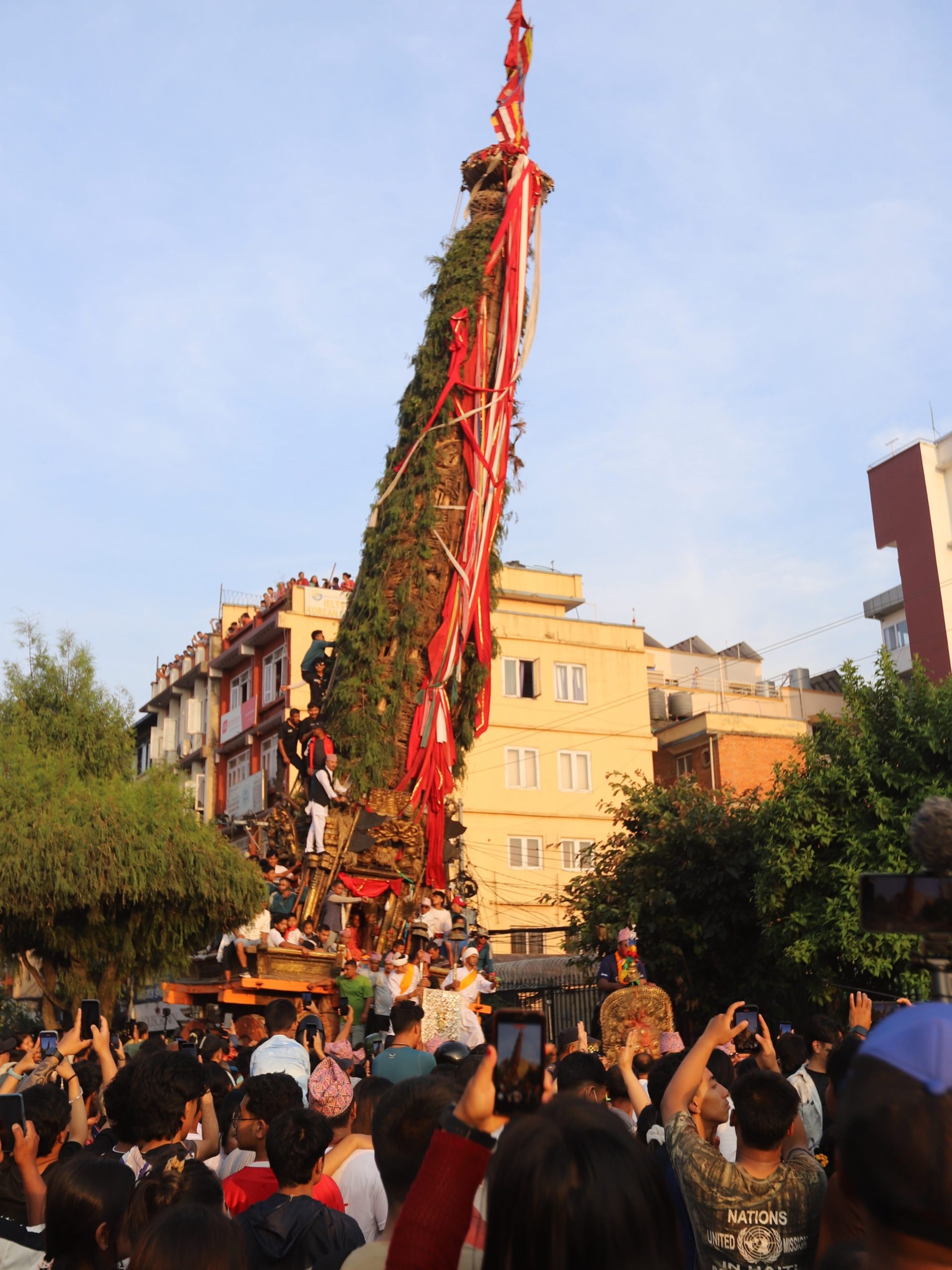
Who Is Rato Machindranath?
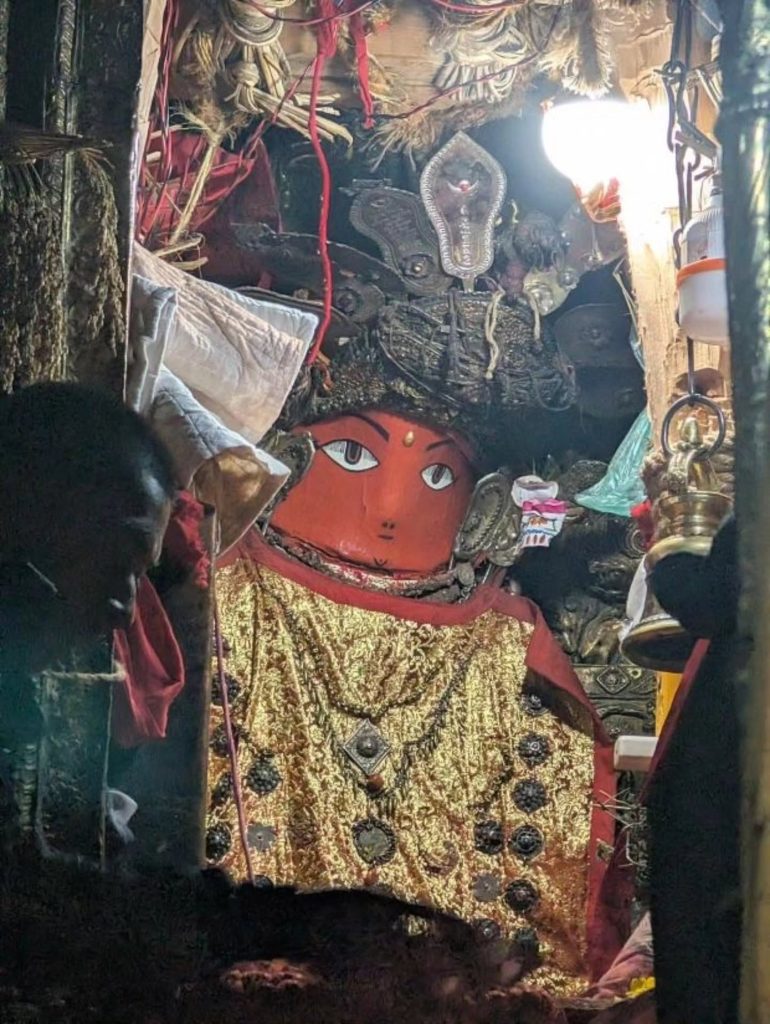
Rato Machindranath is one of the most revered deities in the Kathmandu Valley and holds a unique place in Nepal’s cultural and religious landscape. Worshipped by both Hindus and Buddhists, the deity symbolizes harmony and coexistence between the two faiths. Known by different names and identities, Rato Machindranath is deeply cherished by the local Newar community. Buddhists revere him as Karunamaya, the Bodhisattva of Compassion, while Hindus identify him as Machindranath, a revered yogi associated with the Nath tradition. Among the Newars, he is affectionately known as Bunga Dyah, the protector deity of the valley. This shared devotion and multifaceted identity make Rato Machindranath a remarkable example of Nepal’s unique cultural inclusivity and religious harmony.
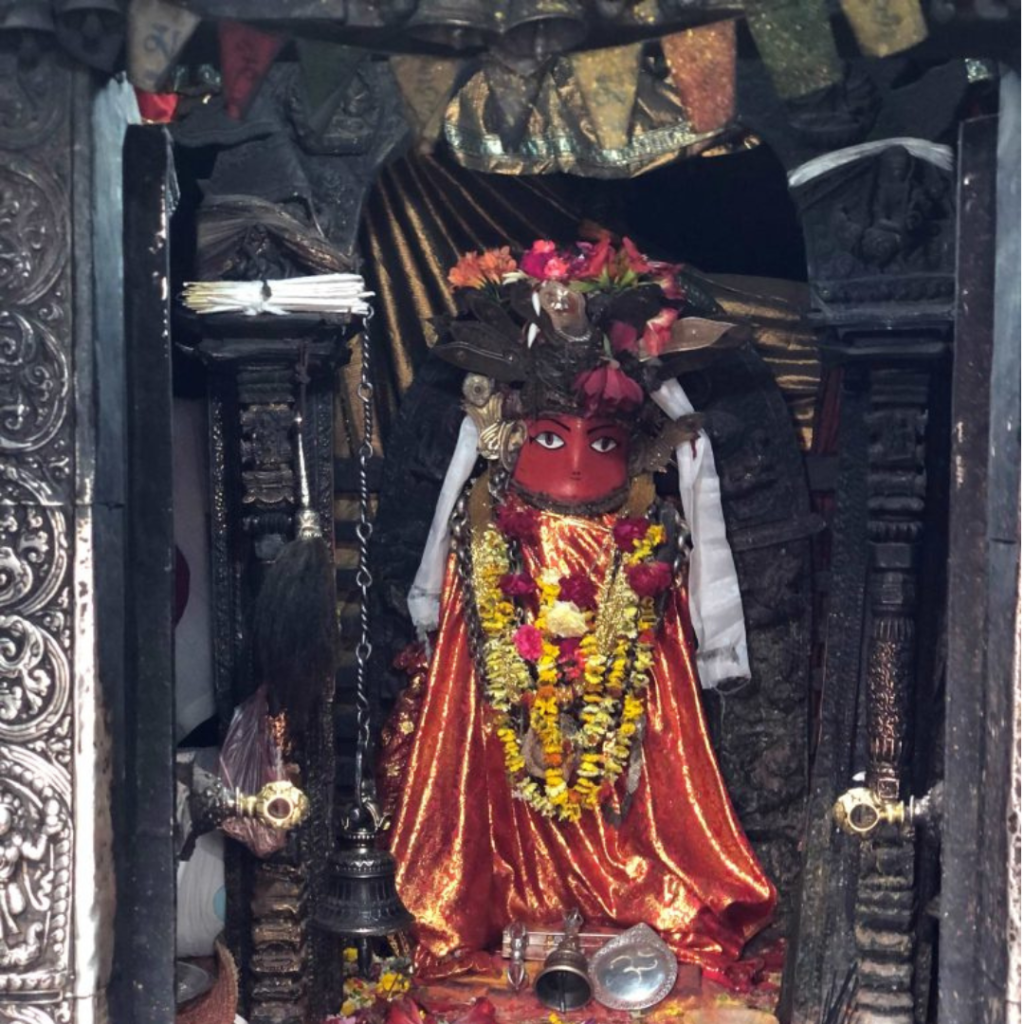
The Legend Behind Rato Machindranath Jatra
According to ancient legend, the Kathmandu Valley once suffered from a devastating drought that lasted for several years. Crops failed, rivers dried up, and people feared for their survival. King Narendra Dev sought guidance from spiritual leaders to end the prolonged drought. It was revealed that the valley’s rain-bringing serpent deities, known as Nagas, had been prevented from bringing rainfall. Only Karunamaya—Rato Machindranath—could restore balance and bring back the much-needed rains.
A spiritual master was sent to a distant land, believed by many to be present-day Assam, to invite the deity to the Kathmandu Valley. After a challenging journey, Karunamaya agreed to come. As soon as the deity arrived, rain returned to the valley, ending the drought and restoring prosperity. Since then, the people of the Kathmandu Valley have celebrated Rato Machindranath Jatra each year as a prayer for timely monsoon rains, abundant harvests, and the well-being of the community. Even today, many local farmers believe that the festival is deeply connected to the success of the agricultural season.
The Grand Chariot Procession
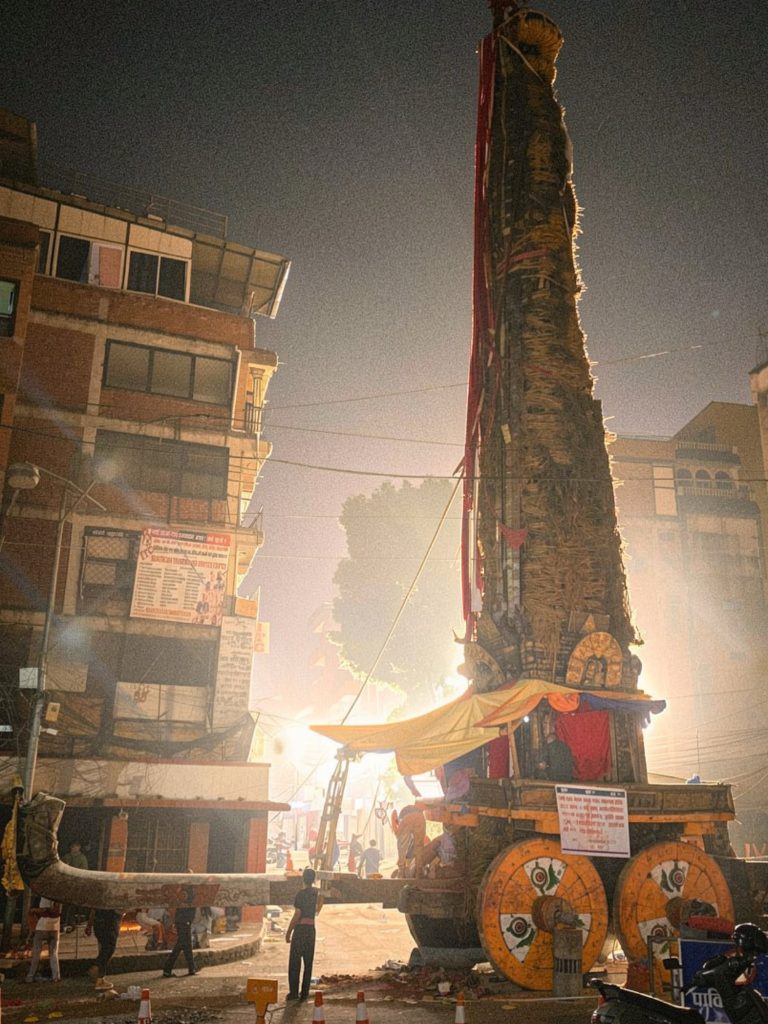
Unlike many religious celebrations where devotees visit a temple, Rato Machindranath leaves his temple and travels among the people. The deity is placed inside a towering wooden chariot, traditionally built by local artisans using age-old techniques passed down through generations. Standing over 18 meters tall, the impressive chariot is pulled by thousands of devotees through the historic neighborhoods of Lalitpur over several weeks.
The journey traditionally begins from Bungamati, the ancestral home of Rato Machindranath, before moving through key areas of Patan, including Pulchowk, Gabahal, Mangal Bazaar, Sundhara, Lagankhel, and Jawalakhel. Each community welcomes the deity with prayers, offerings, music, and cultural performances. The procession symbolizes the deity blessing every neighborhood equally and reinforces the strong sense of community among the residents.
The Story of the Sacred Bhoto
Long ago, a local farmer successfully treated the eye ailment of the wife of a serpent king, or Naga. In gratitude, the serpent king gifted the farmer a precious jewel-encrusted vest. One day, the vest mysteriously disappeared. Later, the farmer spotted another man wearing what he believed to be his bhoto and demanded its return. However, the man insisted that the vest belonged to him. Unable to determine the rightful owner, the dispute was brought before the king. After hearing both sides, the king declared that the vest would remain in the custody of Rato Machindranath until the true owner could prove their claim. Centuries later, no one has come forward with evidence. As a result, the tradition continues. Each year, during Bhoto Jatra, a government official climbs onto the chariot at Jawalakhel and displays the sacred vest to the crowd in all four directions, symbolically asking whether anyone can identify its rightful owner. The answer remains a mystery. After the ceremony, the bhoto is carefully stored away until the following year.
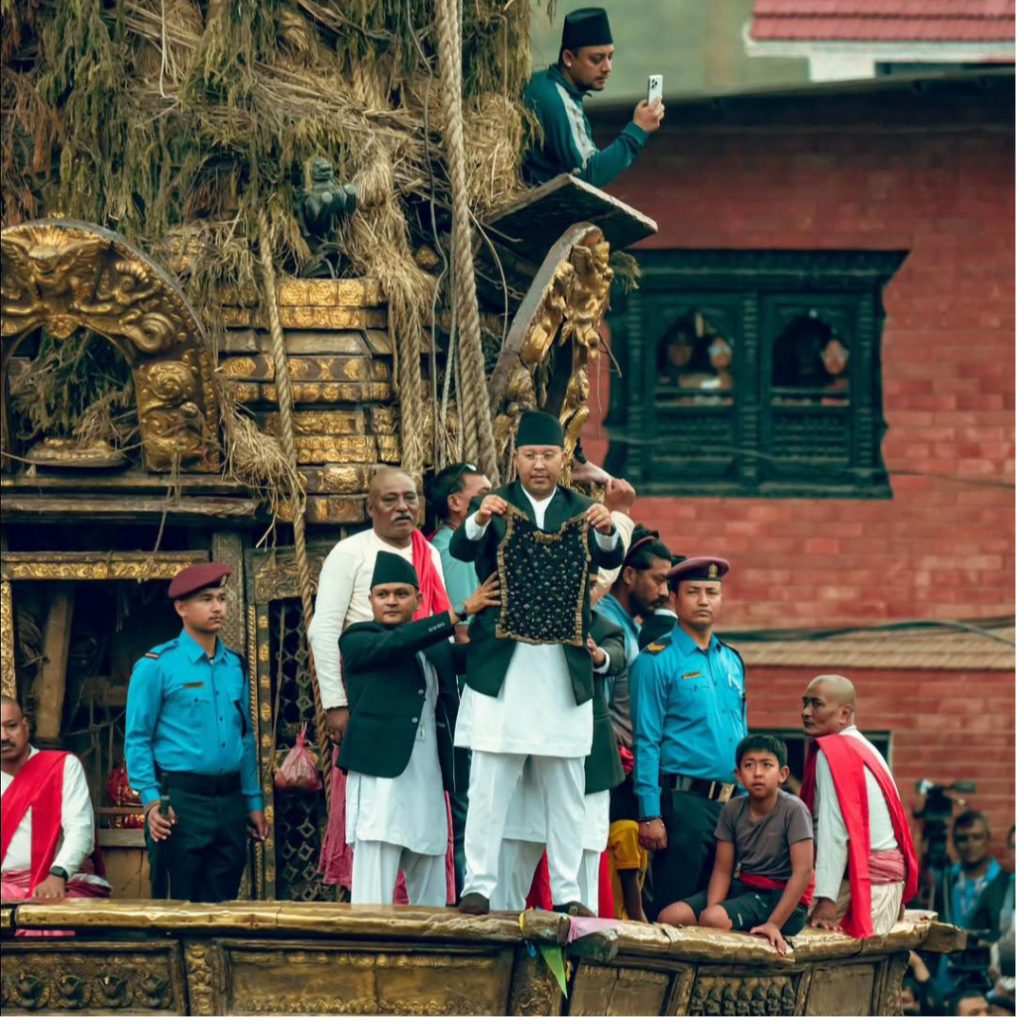
How Are Rato Machindranath Jatra and Bhoto Jatra Connected?
Many visitors assume that Bhoto Jatra is a separate festival, but it is actually the grand finale of Rato Machindranath Jatra. The weeks-long chariot procession concludes when the chariot reaches Jawalakhel. It is here that the sacred bhoto is ceremonially displayed before thousands of spectators, marking the official end of the festival. Traditionally, the ceremony is attended by senior government officials and the head of state, highlighting its national importance. Together, Rato Machindranath Jatra and Bhoto Jatra represent much more than religious celebrations. They reflect Nepal’s values of community, faith, justice, gratitude, and harmony.
Why You Should Experience Rato Machindranath Jatra
For travelers seeking authentic cultural experiences, Rato Machindranath Jatra offers a rare opportunity to witness living traditions that have remained largely unchanged for centuries. The festival brings together spirituality, mythology, architecture, music, community participation, and local customs in a way that few celebrations around the world can match. Visitors can witness one of the world’s tallest traditional chariots in motion, experience the unique blend of Hindu and Buddhist traditions, and explore the historic streets, courtyards, and heritage sites of Patan. The festival also provides a chance to observe centuries-old rituals performed by local communities, gain insight into Nepal’s traditional beliefs surrounding water, agriculture, and seasonal cycles, and capture unforgettable moments of devotion, celebration, and cultural heritage.
Tips for Responsible Festival Tourism
If you plan to attend Rato Machindranath Jatra, it is important to approach the experience with respect and cultural sensitivity. Visitors are encouraged to dress modestly, follow the guidance of local volunteers and authorities, and be mindful when photographing people and religious rituals. For your safety, avoid standing directly in front of the moving chariot, as the procession can become crowded and unpredictable. Supporting sustainable tourism practices, such as carrying a reusable water bottle, minimizing waste, and purchasing goods from local businesses and artisans, can help contribute positively to the community. Above all, remember that Rato Machindranath Jatra is not simply a tourist attraction but a deeply meaningful spiritual celebration that holds immense cultural and religious significance for the local people.
Related Blogs


